


Paid search starts with Google. For a lot of Shopify brands, it ends there too. Bing rarely makes the plan, and when it does, it gets written off as too small to matter. It's an assumption that costs money. For merchants selling premium or considered-purchase products, Microsoft Advertising can quietly become one of the most efficient channels in the mix. The problem isn't that Bing doesn't work, it's that the channel rarely gets a real strategy behind it.
The reach is bigger than the conversation suggests
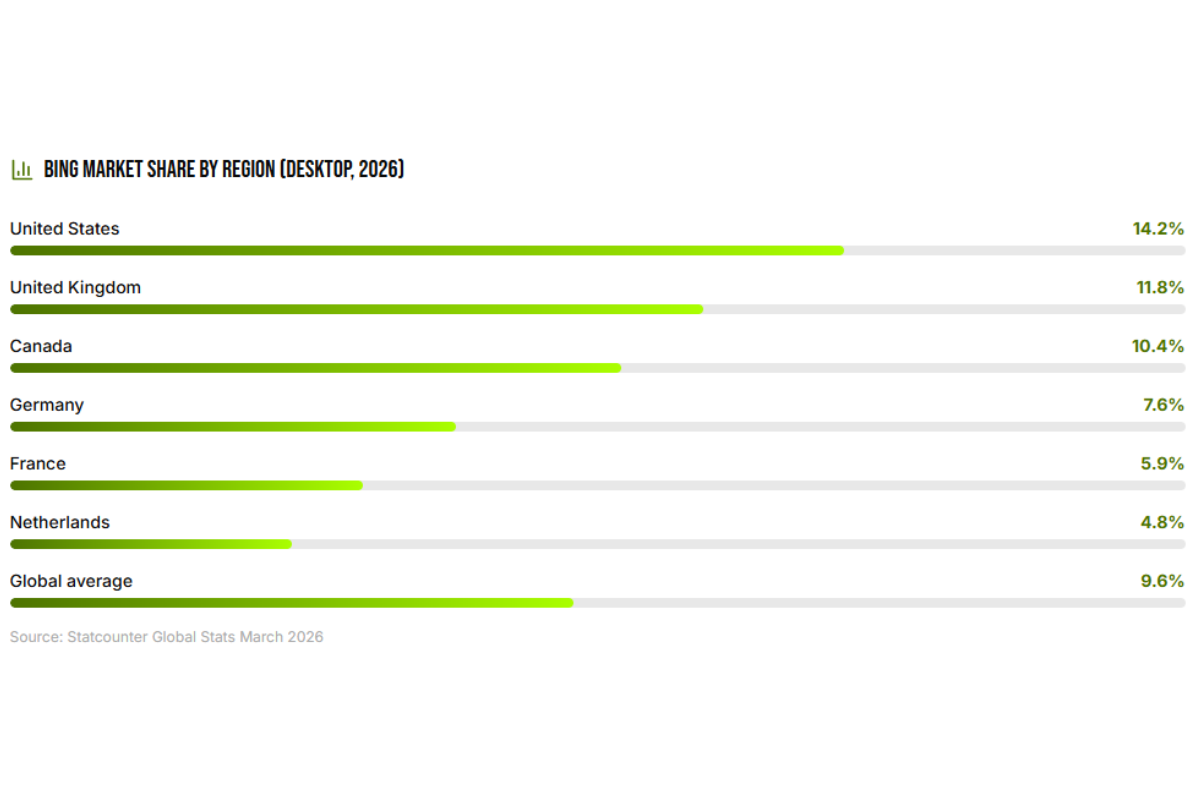
Searchlab's 2026 data puts Bing at around 11.8% of UK desktop search share, and 14.2% in the US. Globally, the network handles roughly 1.2 billion searches a month, and that's before factoring in syndication partners like Yahoo and AOL.
For a store doing £5m a month on Shopify, even a fractional share of that volume is meaningful demand. Calling it niche misses the point.
The audience profile is the actual story
Reach is one part of it. Who's actually searching is the more useful question. Bing skews older, more affluent, and more decision-heavy than the average Google user. The largest cohort sits between 35 and 54. Around 40% earn over $75k a year. Almost half hold a degree, and roughly a third are in management roles. In the UK, a notable share access Bing through workplace devices, which puts your ads in front of professionals during their working day.
For premium homewares, fashion, beauty, wellness, jewellery, or any category with a higher AOV and a longer consideration cycle, that profile is a closer match than most paid social can deliver.
There's one more figure worth pausing on: around 38% of Bing users don't use Google at all. That's incremental reach, not duplicated impressions, which changes the maths on what the channel is actually worth.
Lower competition, lower CPCs, better contribution
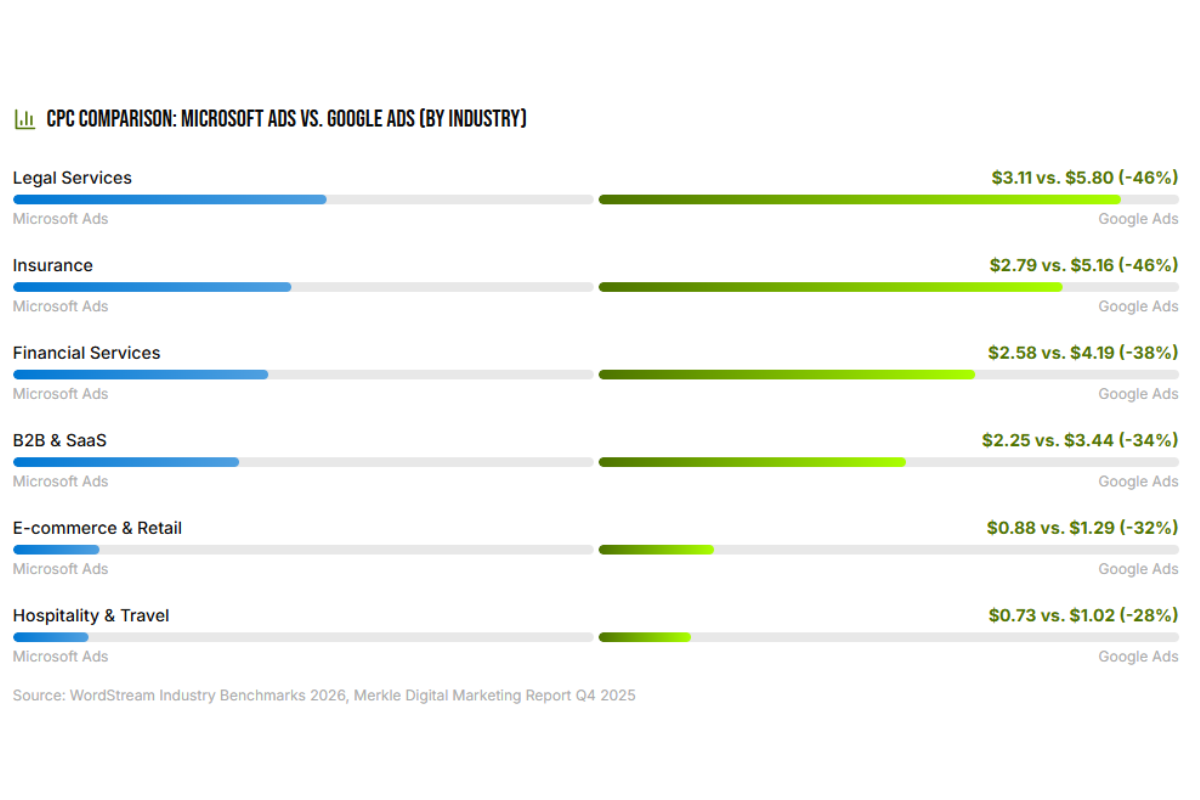
Fewer advertisers means cheaper inventory. Average CPCs sit around £1.17 and drop further in lower-competition verticals, with some benchmarks putting ROI roughly 26% higher than equivalent Google campaigns.
For an ecommerce brand, that translates directly into a lower blended CAC and a stronger contribution margin on the search line. Same product, same creative, often at a better cost per acquisition. We've seen luxury and lifestyle brands take Bing from 5% to 30% of their search budget at a lower CPA inside a quarter. The maths is simple, it's the inertia that holds merchants back.
It works alongside Google, not against it
Treating Bing as a Google replacement is the wrong frame, the right one is coverage. Google handles the bulk of intent. Bing fills the gaps Google misses, captures a different demographic, and gives you a second testing surface that isn't subject to the same competitive volatility.
There's also a structural advantage worth flagging. Microsoft owns LinkedIn, and that data flows into Microsoft Advertising's targeting layer. For Shopify brands selling B2B-adjacent products, professional gifting, premium tools, or anything with a buyer profile defined by job title or seniority, that's a targeting capability nothing else in search comes close to.
Easy to start, easy to get wrong
Microsoft has gone out of its way to make the entry point frictionless. You can import campaigns straight from Google, Meta, and Pinterest, which means structure, keywords, and creative move across in minutes.
That's the trap, because a direct import is a starting position, not a strategy. Bing's user behaviour skews more desktop and more workday. Bidding logic that wins on Google often overpays here. Audience signals from LinkedIn need to be layered in deliberately. Device splits, dayparting, and shopping feed structure all need their own optimisation pass.
The brands that get the most out of Microsoft Advertising treat it as its own channel within their wider media strategy, not a mirrored copy of their Google account.
Where it earns its place for Shopify brands
Bing won't outperform Google across the board, and pretending it will is how the channel ends up dismissed. It performs best where its audience profile aligns with the product. For Shopify, that's the premium and considered end of the catalogue: interiors, jewellery, watches, designer fashion, wellness, gifting, lifestyle, and DTC brands with a higher AOV and a buyer who takes their time.
For impulse-led categories with younger demographics, the case is weaker. The channel rewards a clear-eyed match between product and audience, not a blanket roll-out.
The thesis, in one line
If you're spending only on Google, you're paying full price for clicks Bing would deliver cheaper, and missing a slice of the market that doesn't search anywhere else.
Run with intent, Bing pays its way. Run on autopilot, and it confirms every assumption you had about why it doesn't work. The brands getting it right are the ones who've stopped treating it as Google's smaller cousin and started running it as a channel in its own right.
If you're a Shopify brand running paid search entirely through Google, there's margin sitting in Bing you're not capturing. Our PPC team builds Bing strategies for ecommerce brands who want the full picture from search, not the Google-only version of it. Get in touch when you want to see what that means for your numbers.